How Accurate Are Baby Nap and Sleep Predictions?
A sleep prediction is an estimate from your baby's own pattern. Read it as a guess, and let your baby's cues lead.
Are baby sleep predictions accurate? We couldn't find published research showing how accurately the apps we reviewed predict nap times. We read 71 sources to find out, and our research report lists them all.
We make a baby tracker with sleep estimates, so we have a stake here. We did not test our own estimates.
What We Found About Accuracy
We found no published accuracy figure or independent test. The only number was "up to 89%" in one app's store listing, and it doesn't say what counts as a correct prediction.
That is a gap in the public evidence, not proof that predictions are wrong. A claim like "remarkable accuracy" still gives you nothing to check.
Why Young Babies Are Hard to Predict
Newborns don't yet have regular sleep patterns, which makes their next nap harder to predict. The American Academy of Pediatrics says babies don't have regular sleep cycles until about 4 months and that sleep needs differ from baby to baby.
In one small study, a 24-hour sleep pattern took 49 to 110 days to appear. Sleep needs vary too: the NHS says newborns may sleep around 18 hours a day, while the AAP estimates 16 to 17 hours.
Wake Windows Are a Starting Point
Many apps start from age-based wake windows, the time a baby stays awake between sleeps. We found no study that checks these tables against real babies. The idea is sensible, but a table can't know your baby.
What Sleep Tracking Can Tell You
Logging when your baby falls asleep and wakes up builds a record an app can use to estimate the next sleep. One large dataset of app-logged sleep showed morning wake times were more consistent than bedtimes. That may make bedtime harder to predict, though the study didn't test accuracy.
When your baby's sleep varies from day to day, predictions become less certain.
We also found no trials comparing predicted nap times with no tracking, so it's unclear whether predictions help parents. In the early weeks, the NHS recommends feeding your baby as often as they want, rather than following a predicted schedule.
How to Read an Estimate
Expect the most variation in the first months. Treat an estimate as a hint to watch for sleepy cues, not a target. If tracking makes you feel more stressed than reassured, it's okay to take a break. If you're concerned about your baby's sleep, talk to your pediatrician.
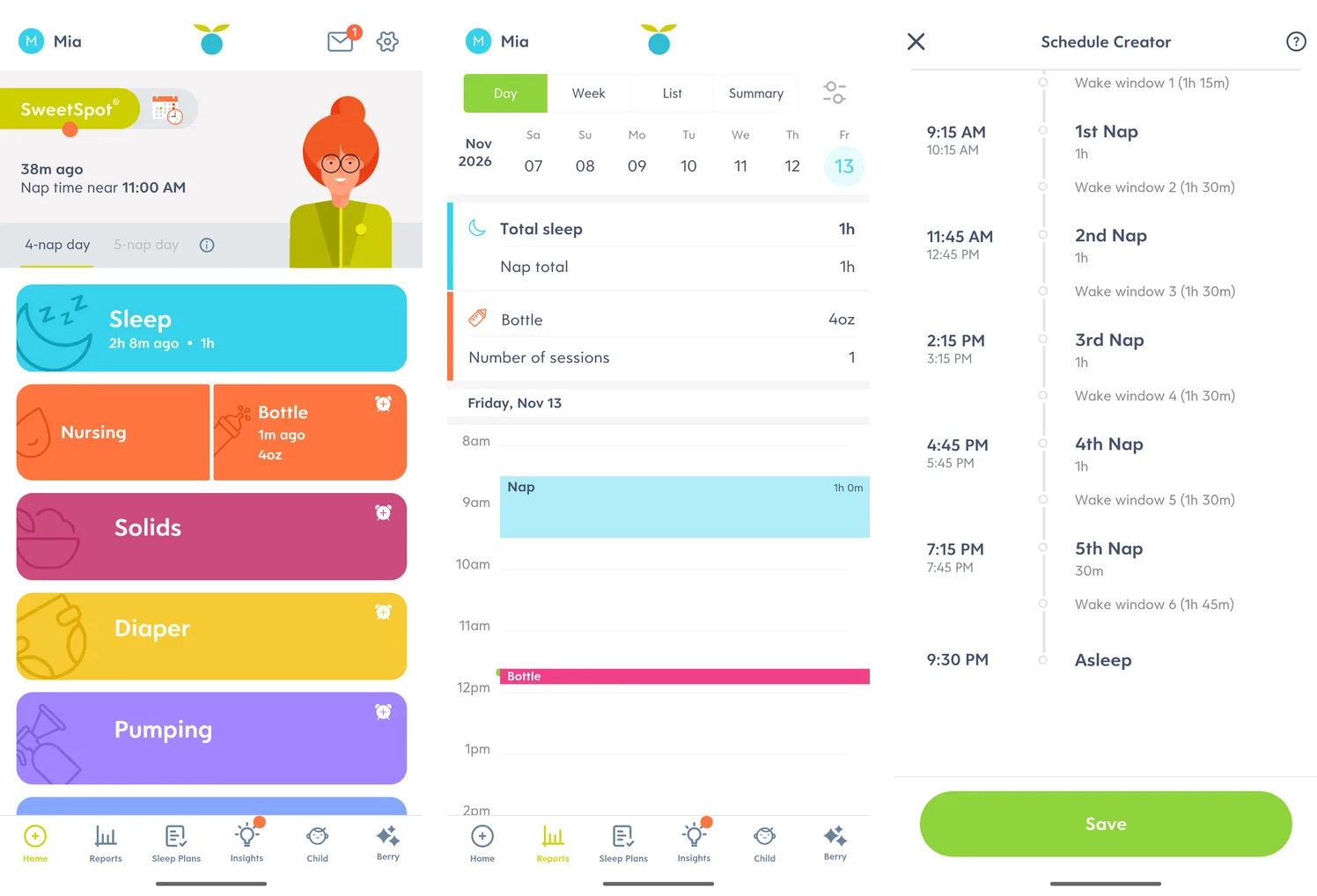
In Cutiko, estimates come from your baby's own logged sleep, and Cutiko says so when there isn't enough to go on.
Sources
- American Academy of PediatricsWhen Baby Sleep Cycles Become Regular
Babies do not have regular sleep cycles until about 4 months. Newborns sleep about 16 to 17 hours a day, often 1 or 2 hours at a time, and different babies have different sleep needs.
- NHSEvery Baby Has Their Own Sleep Pattern
A newborn's total sleep varies but can be around 18 hours a day. All babies change their sleep patterns, and growth spurts, teething, and illness can affect sleep.
- NHSFeed Newborns As Often As They Want
In the first week a baby may want to feed every 1 to 3 hours. Feed your baby as often as they want and for as long as they want.
Keep reading
Best Baby Tracker Apps of 2026
We read nearly a million posts, comments and reviews from parents to find the best baby tracker apps of 2026. Here are nine, and what each does best.
CCutiko teamBuilding CutikoLive Sleep Forecast for Your Baby's Next Nap
Your baby's next nap time now works like a forecast, always the latest estimate, with their awake time and today's sleep total beside it.
See When Your Baby May Sleep or Wake Up
Cutiko now estimates when your baby may sleep or wake based on their recent patterns, and helps you add context when a day looks different.